
At first glance, a rear-end accident at an intersection may appear simple. One vehicle stops; the other fails to brake in time. Fault, it would seem, is obvious. Yet in California, the truth is far more complicated. Every rear-end collision carries a story of timing, visibility, distraction, and human judgment; and determining fault requires understanding how all those details intersect under the law.
Rear-end accidents are among the most common collisions on California roads, particularly at busy intersections where traffic lights, turning lanes, and crosswalks create layers of split-second decision-making. These crashes can cause serious injuries even at low speeds, including whiplash, spine and disc trauma, concussions, and chronic pain that may not appear until days later. For victims, what begins as a “minor” crash often turns into months of medical treatment and uncertainty about compensation.
Under California law, the driver who strikes another vehicle from behind is presumed negligent, but that presumption is not absolute. Intersections create countless variables that can shift liability, from a sudden stop in heavy traffic to a malfunctioning brake light or an unsafe lane change. The legal question is not just who hit whom, but why it happened, and whether both drivers acted reasonably under the conditions at hand.
Understanding fault in these cases is more than a technical exercise; it’s about fairness. Victims deserve compensation when they are hurt through no fault of their own, but they also deserve an investigation that uncovers the full truth, not just the surface appearance of blame.
This guide breaks down how California law assigns fault in rear-end intersection collisions, how evidence determines responsibility, and what steps victims can take to protect their rights and secure recovery.
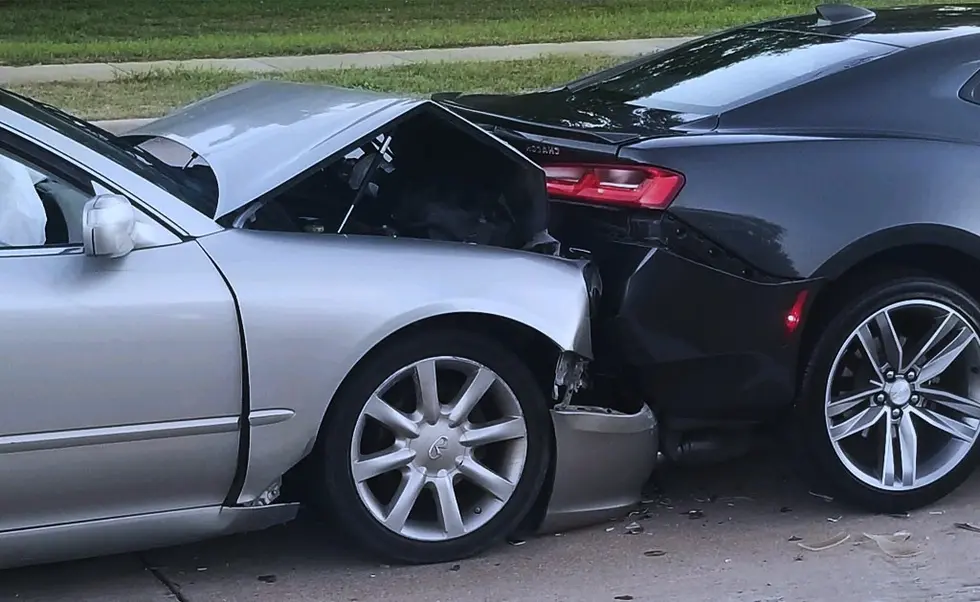
Understanding Fault in California Rear-End Accidents
The Presumption of Negligence for the Rear Driver
California law generally assumes that the driver who strikes another vehicle from behind is at fault. This presumption is rooted in the duty of care every motorist owes to maintain a safe following distance and to remain alert for changing traffic conditions. The logic is simple: if a collision occurs, the trailing driver must not have been watching closely enough or controlling their speed appropriately.
However, this presumption, while strong, is not absolute. It serves as a starting point, not a final judgment. Liability can shift or be shared depending on the behavior of both drivers and the circumstances leading up to the collision.
When the Front Driver May Share Responsibility
Though less common, there are situations where the front driver may bear some or even most of the responsibility for a rear-end crash. A driver who stops abruptly without reason, fails to signal before turning, reverses suddenly at an intersection, or operates a vehicle with broken brake lights can all contribute to a collision.
California law recognizes that safe driving is a mutual obligation. If evidence shows that the leading vehicle’s actions were unpredictable or unsafe, fault may be divided under the state’s comparative negligence system. That distinction is critical, as it transforms what many consider a one-sided claim into a case that demands full investigation.
Comparative Negligence and Shared Fault Rules
California follows a pure comparative negligence model, meaning each party in an accident can be assigned a percentage of fault. A victim who is found partially responsible can still recover damages, but the award is reduced by their percentage of fault.
For example, if the rear driver was distracted but the front driver braked suddenly to answer a phone or execute an illegal turn, the court may apportion fault between them. The rear driver might be found 60% responsible, while the front driver bears 40%. Compensation is then adjusted accordingly. This system ensures fairness but also underscores why representation matters. Determining fault is not always a matter of physics or assumption; it’s an exercise in evidence, context, and advocacy. The outcome often depends on how effectively that story is told.
Call our personal
injury lawyers today
Why Intersections Make Rear-End Collisions So Common
Sudden Stops, Yellow Lights, and Split-Second Decisions
Intersections are the most unpredictable spaces on California roads. Drivers approaching a yellow light face an instant judgment call: brake abruptly or proceed through. Those split-second decisions, combined with following traffic that anticipates one choice while witnessing another, are a leading cause of rear-end collisions.
Even cautious drivers can misread intentions. A driver might slow to yield for a pedestrian or hesitate at a green light when unsure of cross traffic, and the vehicle behind them reacts too late. In these moments, timing becomes liability; and the question is not merely who stopped, but whether each driver acted as a reasonable person would under the same circumstances.
Distracted and Aggressive Driving Behaviors
Modern intersections test attention spans like never before. Smartphones, dashboard screens, and traffic congestion all contribute to delayed reactions. A driver looking down for even two seconds can travel the length of half a football field, just enough to miss a slowing car ahead.
Aggressive driving compounds the problem. Tailgating, rapid lane changes, and impatience at lights create conditions where the margin for error disappears entirely. These behaviors are often the root of intersection rear-end accidents, and under California law, they constitute clear evidence of negligence.
When an investigation shows the rear driver was following too closely, speeding to beat a light, or distracted by a device, those details help establish fault beyond dispute.
Mechanical Failures and Environmental Factors
Not every rear-end collision is the product of inattention. Sometimes the cause lies in mechanical failures, like worn brakes, bald tires, or defective brake lights. In these cases, liability may extend beyond the driver to a repair shop, manufacturer, or even a municipal agency responsible for maintaining road signals.
Weather and road conditions also play a role. Slick pavement, glare from the sun, or poor intersection design can reduce stopping distance and visibility. When these elements contribute to a crash, the question becomes whether each driver adjusted their behavior appropriately.
Intersections reveal how fragile coordination on the road truly is. A single moment of hesitation, distraction, or misjudgment can trigger a chain reaction; one that California law examines not just through impact, but through conduct as well.
Investigating a Rear-End Accident: How Fault Is Proven
Using Physical Evidence and Vehicle Damage Analysis
Every collision leaves a physical trail that tells a story; one that can confirm or contradict what drivers report. The location and pattern of vehicle damage, the angle of impact, and the length of skid marks all help reconstruct how the crash occurred. In rear-end collisions, investigators look closely at whether the point of impact aligns with the version of events: Was the trailing driver following too closely, or did the front driver change lanes abruptly before braking?
Modern vehicles often contain electronic data recorders, or “black boxes,” that capture pre-impact speed, braking pressure, and steering input. Combined with road debris, crush analysis, and police photographs, this data can help identify the precise sequence of movement leading to impact. Even in what appears to be a straightforward crash, these details can shift the narrative of fault entirely.
The Role of Surveillance Footage, Dashcams, and Witnesses
Intersections are increasingly surrounded by cameras, from nearby businesses, traffic lights, and even other vehicles. A single video clip can provide a neutral, time-stamped account of what actually happened. Footage showing a driver accelerating toward a red light or glancing down before impact can establish negligence with irrefutable clarity.
Dashcam footage from the vehicles involved can be equally valuable, especially when disputes arise about sudden stops or unsafe maneuvers. Witness statements, though sometimes inconsistent, can fill in gaps and confirm whether traffic signals were changing or whether the driver appeared distracted.
An experienced attorney knows how to locate and secure this footage quickly before it’s overwritten or deleted, and how to weave those fragments into a cohesive timeline that supports the client’s account.
Police Reports and Accident Reconstruction
Law enforcement plays a pivotal role in documenting intersection crashes. Police reports often contain initial fault assessments, statements from both drivers, and diagrams that show impact points and positions of rest. While these reports are not definitive proof of liability, they provide an early framework for understanding how the responding officer interpreted the scene.
When injuries are serious or fault is contested, attorneys may bring in accident reconstruction experts to analyze every element: vehicle weights, stopping distances, reaction times, and line-of-sight measurements. These experts use physics-based modeling to show whether the rear driver had enough time to stop or whether the front driver’s actions created an unavoidable hazard.
By combining factual data with professional interpretation, investigators convert uncertainty into evidence and evidence into accountability.
personal injury lawyer
get a free consultation
Common Scenarios That Complicate Liability
Multi-Vehicle Chain Reactions
Rear-end accidents at intersections often involve more than two vehicles. A single impact can trigger a chain reaction, one car pushed into another, which is then forced forward again. In these situations, determining fault is rarely straightforward. The rear-most driver may have initiated the crash, but each subsequent impact can be influenced by timing, distance, and the behavior of other drivers.
For instance, if a second driver followed too closely and failed to maintain a safe buffer, that driver might share liability even though they were initially struck from behind. In California, the key question is not simply who hit whom, but whose actions contributed to the cascade of collisions. Accident reconstruction becomes essential in these cases, as it reveals which impact occurred first and how force was transferred through each vehicle.
Sudden Stops or Brake Checks
Sometimes, rear-end collisions happen because the lead driver brakes sharply or intentionally slows to provoke the trailing car; a tactic known as “brake checking.” These behaviors complicate the standard presumption that the rear driver is always at fault.
If evidence shows the front driver acted unpredictably, either to avoid a hazard or to express frustration, fault may shift under California’s comparative negligence rules. Even if the rear driver could have reacted more quickly, the law does not excuse reckless or retaliatory braking that creates unnecessary danger.
Video footage and eyewitness statements often prove decisive in these cases. They reveal not just mechanics, but motive; the difference between a legitimate stop and an act of aggression.
Rear-End Collisions Involving Commercial or Rideshare Vehicles
When the vehicle that causes a rear-end collision belongs to a commercial fleet or rideshare service, the case expands beyond driver negligence. A distracted delivery driver or fatigued rideshare operator may be personally responsible, but their employer or platform could also share liability.
California law holds companies accountable when their business practices, such as poor driver training, long shifts, or unreasonable scheduling, contribute to unsafe driving. These cases demand deeper investigation because they involve multiple layers of insurance coverage and corporate defense teams prepared to minimize exposure. What appears at first to be a simple two-car collision can quickly evolve into a multi-party claim requiring strategic coordination and experienced legal advocacy.
Legal Rights and Next Steps After a Rear-End Collision
Medical Care, Documentation, and Reporting Requirements
Even after a seemingly minor rear-end collision, a medical evaluation should be the first step. Injuries such as whiplash, concussion, and spinal strain often appear hours or days later, long after adrenaline masks the initial pain. Early diagnosis not only protects your health but also establishes the causal link between the crash and your injuries, which is vital for any insurance or legal claim.
In California, every driver involved in an accident resulting in injury or property damage must file a Form SR-1 with the Department of Motor Vehicles within ten days, regardless of who was at fault. This report, along with the police report, forms part of the official record of the incident. Together, these documents create the paper trail that insurers and attorneys rely on to prove both the occurrence and the impact of the crash.
Keep copies of all medical records, receipts, and correspondence related to treatment. These serve as the foundation for your claim and ensure that your damages are supported by clear, verifiable evidence.
Insurance Claims and Settlement Strategies
After the collision, both drivers typically report the accident to their insurance companies. The process seems routine until the fault becomes contested. Adjusters representing the at-fault driver’s insurer will seek recorded statements, medical authorizations, and quick settlements designed to minimize payout.
Under California’s comparative negligence system, how fault is framed early on can dramatically influence the claim’s value. That’s why victims are advised to limit communication with insurers until they have legal representation. An experienced attorney can handle those discussions, ensuring that your statements align with evidence and that no details are used to shift blame.
A well-prepared claim includes a comprehensive demand package that quantifies medical costs, lost income, property damage, and pain and suffering. By presenting a clear and fully documented case, your legal team sets the stage for a fair negotiation or trial, if necessary.
When to Contact an Attorney and Why Timing Matters
Rear-end collisions may look straightforward, but insurance carriers often exploit their simplicity to deny or undervalue claims. They may argue that the impact was too light to cause injury or that your pain stems from a preexisting condition. Having an attorney involved early prevents those tactics from taking root. Legal counsel can immediately preserve evidence, secure witness statements, and coordinate expert evaluations that validate your injuries and the mechanics of the crash.
In California, the statute of limitations for personal injury claims is generally two years from the date of the accident, but key evidence, such as surveillance footage or traffic data, can disappear within days. Acting quickly ensures your rights remain intact and your case begins from a position of strength.
Conclusion: Understanding Fault, Protecting Your Rights, and Moving Forward
Rear-end accidents at intersections may seem like open-and-shut cases, but California law teaches otherwise. Every collision reflects a moment of human judgment: a driver distracted for a second, a sudden stop, a changing light, and within those moments lies the difference between assumption and accountability.
Understanding fault is not about blame alone; it’s about context. It’s about uncovering how and why an impact occurred and ensuring that those injured are treated fairly under the law. Whether the cause was inattention, mechanical failure, or a chain of split-second decisions, the law requires a careful look at every factor before assigning responsibility.
At Vaziri Law LLP, we believe education is the first step toward justice. Knowing your rights, your obligations, and the truth about fault can prevent you from accepting less than you deserve. And when the system feels impersonal, our role is to restore the human element, to make sure your voice, your injuries, and your story are heard with the gravity they deserve. Because every intersection tells a story. When that story ends in injury, justice begins by understanding not just who was behind the wheel, but what went wrong, and who must make it right.